Do you need a limited company as a dental associate?

The decision over whether to ‘incorporate’ is one that many professionals confront as their dental career gets under way, writes dental accountant manager James Allsop. Here are some pointers as to the pros and cons.

It’s quite usual for a dental associate to be self-employed. And if you’re in that position, you’re effectively already running a small business, perhaps paying a practice a licence fee for facilities and support.

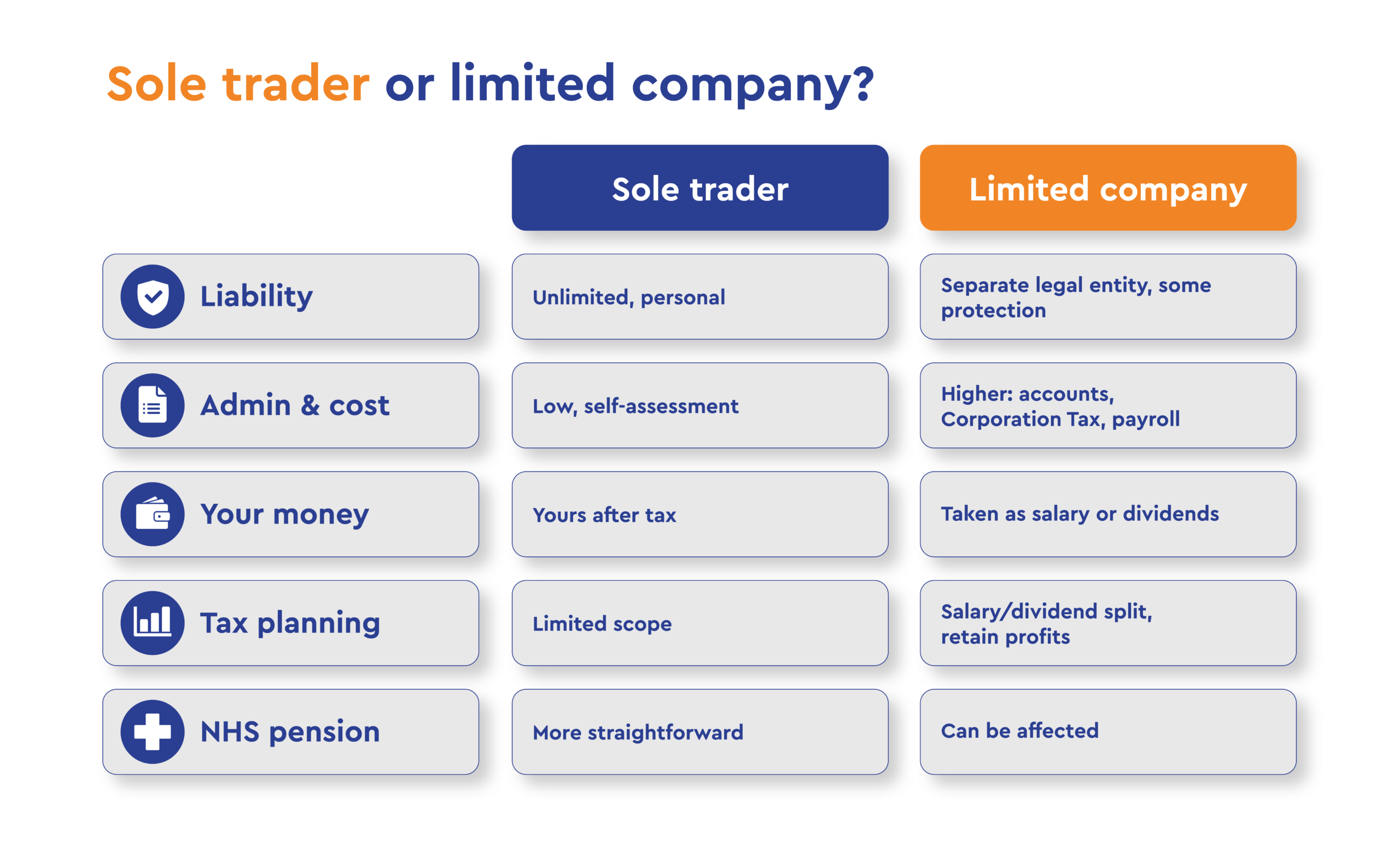
The actual choice you probably need to make is whether you want to remain what is known as a ‘sole trader’ or set up a limited company. This is not a straightforward decision, mainly because there are advantages and disadvantages to both options. Let me run through them in broad terms here, but you may want to take some professional advice on your own specific circumstances.

Working as a sole trader

It’s worth taking a look at the government web page on this subject, but I think it’s fair to say that being a sole trader is…

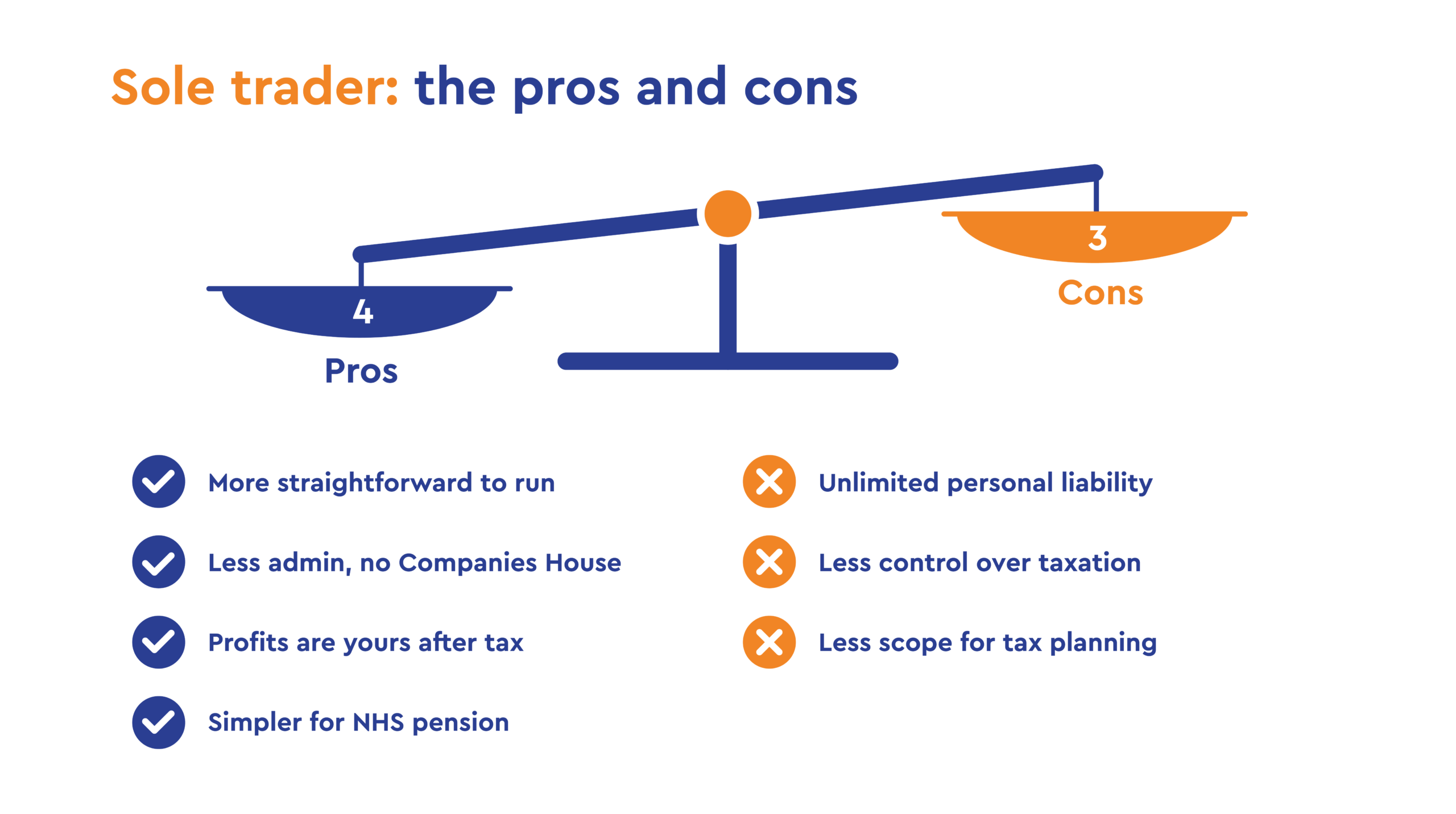
More straightforward ✅

You report via self-assessment and keep your profits personally after tax.

Less burdensome in terms of admin ✅

There’s no need to file documentation with Companies House, produce company accounts or a Corporation Tax return. This saves both time and money.

An easier route to accessing money ✅

There is no distinction between your money and that of the business. After tax, what you make belongs to you.

A less complex set-up for pensions ✅

If you choose to incorporate (set up a limited company), this may have implications for your NHS pension arrangements.

At the same time, there are some important disadvantages you’ll need to consider:

You have unlimited liability ❌

A sole trader has personal responsibility for all the debts and liabilities of the business they operate.

You have less control over some aspects of taxation ❌

A sole trader lacks the ability to leave post-tax profit inside a company for later extraction via dividends.

You have less scope for tax planning ❌

A sole trader can’t operate a salary/dividend divide and has no separate corporate entity in which profits can accumulate.

Setting up a limited company

Here, looking at the advantages, we could list:

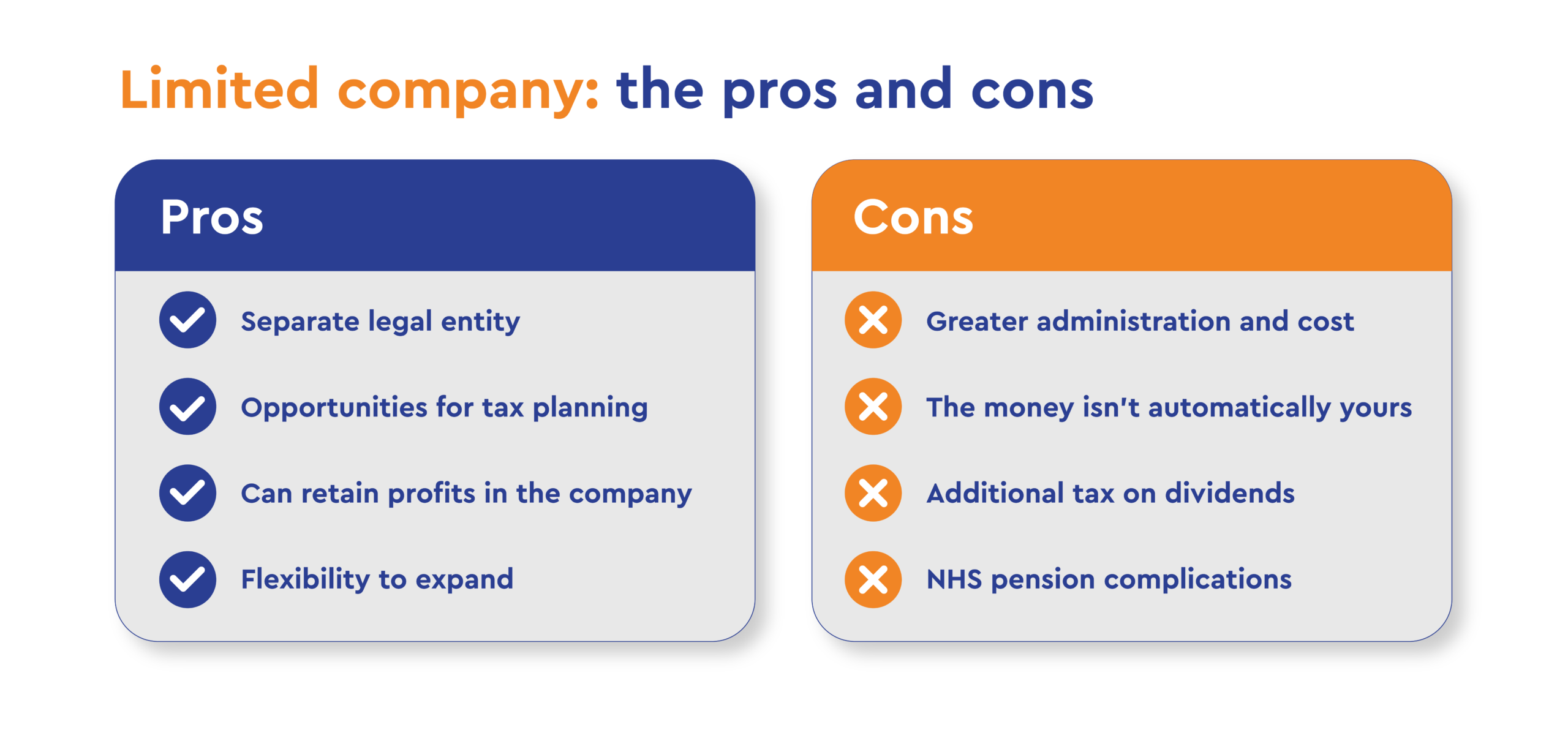
The separate legal entity ✅

A company creates a distinction between you as a dentist and the business, potentially providing protection against some liabilities (although not indemnity for your actions or omissions). It separates business and personal finances.

Opportunities for tax planning ✅

You will pay corporation tax on company profits, but can choose when and how to extract those profits.

Retention of profits ✅

Money can remain within the company to fund future investment or provide flexibility over the timing of withdrawals.

Flexibility for expansion ✅

If you eventually end up employing staff, undertake additional commercial activities or develop other business interests, the existence of a company structure will be useful.

At the same time, we also have to think about the potential disadvantages of incorporation:

Greater administration and cost ❌

You have to prepare the accounts for a limited company, pay corporation tax, meet your Companies House obligations and deal with payroll. As a result, you’ll need the support of a professional accountant.

The money isn’t automatically yours ❌

The cash within the company belongs to the company. You can only extract it in specific ways, such as through salary or dividends.

Additional tax considerations ❌

Corporation tax isn’t your only bill. When you extract profit, you will have to pay tax on dividends and possibly on personal income.

Pension complications ❌

As a dental associate, this is a particular issue – your NHS contract and pension arrangements can be affected by operating through a limited company. See the BDA’s advice here.

As you can see, there’s a lot to weigh up. It’s well worth investing the time to talk to a professional who can help you balance the pros and cons in your own specific circumstances. Here at Page Kirk, we’re always ready to help. Simply call us on 0115 955 5500 or email enquiries@pagekirk.co.uk.

Find out more about how we help dentists

The Page Kirk team ensures all content is accurate, fact-checked, and aligned with current financial standards.

Latest Articles