1. Inheritance Tax
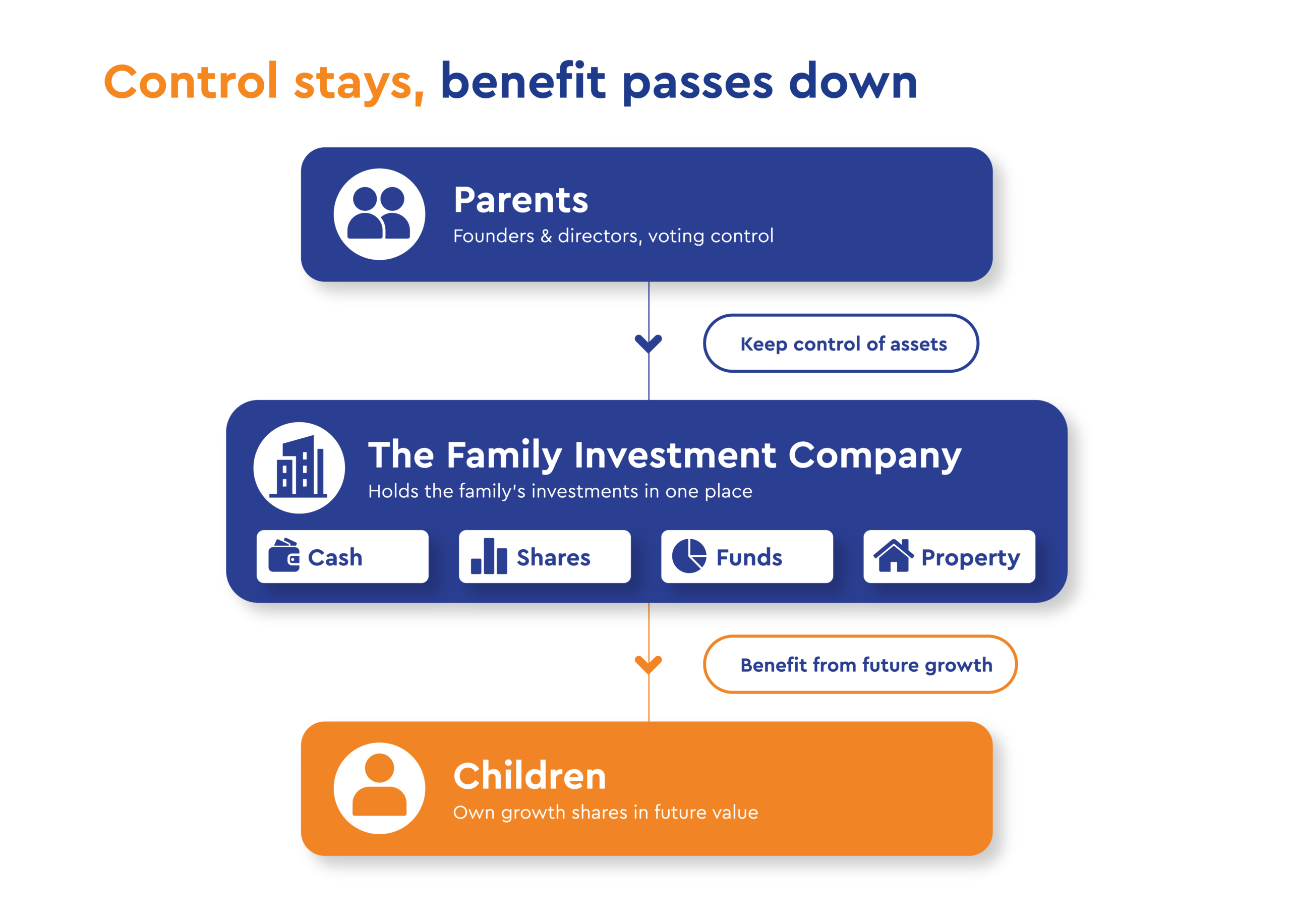
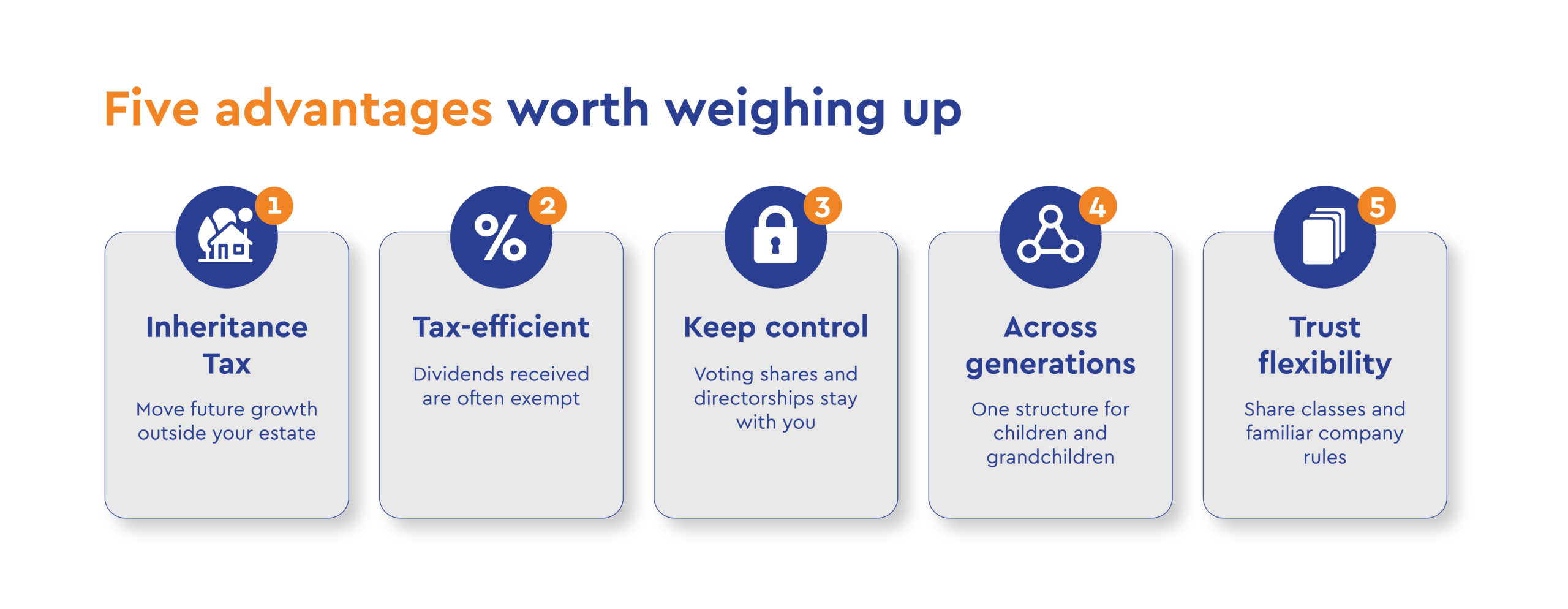
This is perhaps the biggest motivator. Suppose the parents put £1m into the company and give the children shares. If the company subsequently grows to be worth £2m, the children’s shares will benefit from the growth in value, without the parents necessarily owning it. In this way, some of the future value of the parents’ estate will have been transferred. It is important, however, to take advice, as simply putting assets into a FIC does not automatically eliminate IHT. The original transfer, the share rights and the funding arrangements all matter (see below).
2. Tax-efficient investment
Companies pay corporation tax on their taxable profits. For some investments, this can be advantageous. For example:
- ➞ Interest income is generally taxable within the company
- ➞ Rental profits are generally subject to corporation tax
- ➞ Capital gains on investments are generally subject to corporation tax
- ➞ Dividends received from many UK and overseas companies are often exempt from corporation tax
The company can then reinvest its post-tax profits without necessarily distributing the money to family members, which creates the possibility of compounding investment returns.
3. Retaining family control
Even after transferring economic interests to the children of the family, parents are able to retain control if the FIC is properly structured. Parents can own voting shares, while children have non-voting ones, for instance. And the parents can serve as directors, with the company deciding when dividends are paid. This can help transfer wealth gradually, without handing over immediate control of the underlying investments.
4. Passing wealth between generations
A FIC can provide a long-term structure for family wealth. Rather than dividing up investments and transferring them individually, the family holds investments in one company. It can potentially continue across generations with shares allocated to children and grandchildren.
5. Avoiding some of the complications of trusts
When you choose a FIC, you’re potentially giving yourself more flexibility than with a trust. A family can, for example, use different share classes to allocate economic rights, voting rights and dividend entitlements. It is also an established corporate structure, so the accountancy and governance rules are familiar.
How are FICs funded?
Here, there are two common approaches.
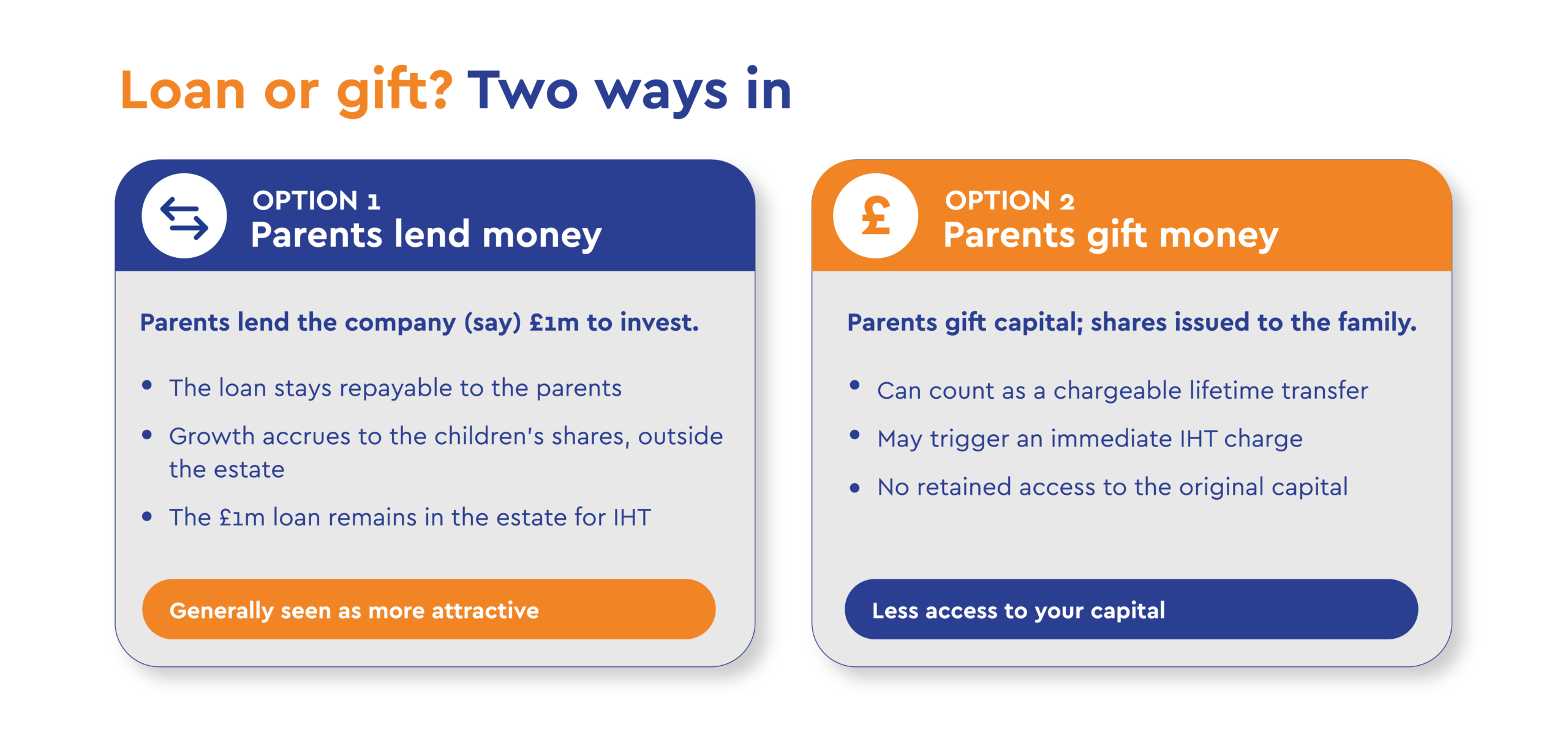
OPTION 1: PARENTS LEND MONEY TO THE COMPANY
For example, the parents lend the company £1,000,000, which is then invested by the FIC. The parents retain the right to have the loan repaid and the children own shares that help them to benefit from the growth in the company’s value.
The £1m loan will remain part of the parents’ estate for inheritance tax purposes, but future growth attributable to the children’s shares can accrue outside the estate.
OPTION 2: PARENTS GIFT MONEY TO THE COMPANY
Here, the parents transfer money into the company as capital, with shares issued to family members, which has a different bearing on inheritance tax. A gift into a company can be treated as a chargeable ‘lifetime transfer’ and potentially trigger an immediate IHT charge. The loan approach is therefore generally seen as more attractive, as it allows parents to retain access to their original capital.