What your international group wants from your UK audit

If you’re working for a UK subsidiary of an overseas parent company, your distant bosses may be looking at your audit process a little differently from you. That’s why you need an accountancy partner who can satisfy their requirements as well as yours, writes Sonja Dengler, audit and accounts manager at Page Kirk.

There can often be a big difference, in my experience, in the answer to two questions.

The first is: ‘Has our UK statutory audit been properly completed?’

The second is: ‘Has our auditor given the global business everything they need to sign off the consolidated accounts?’

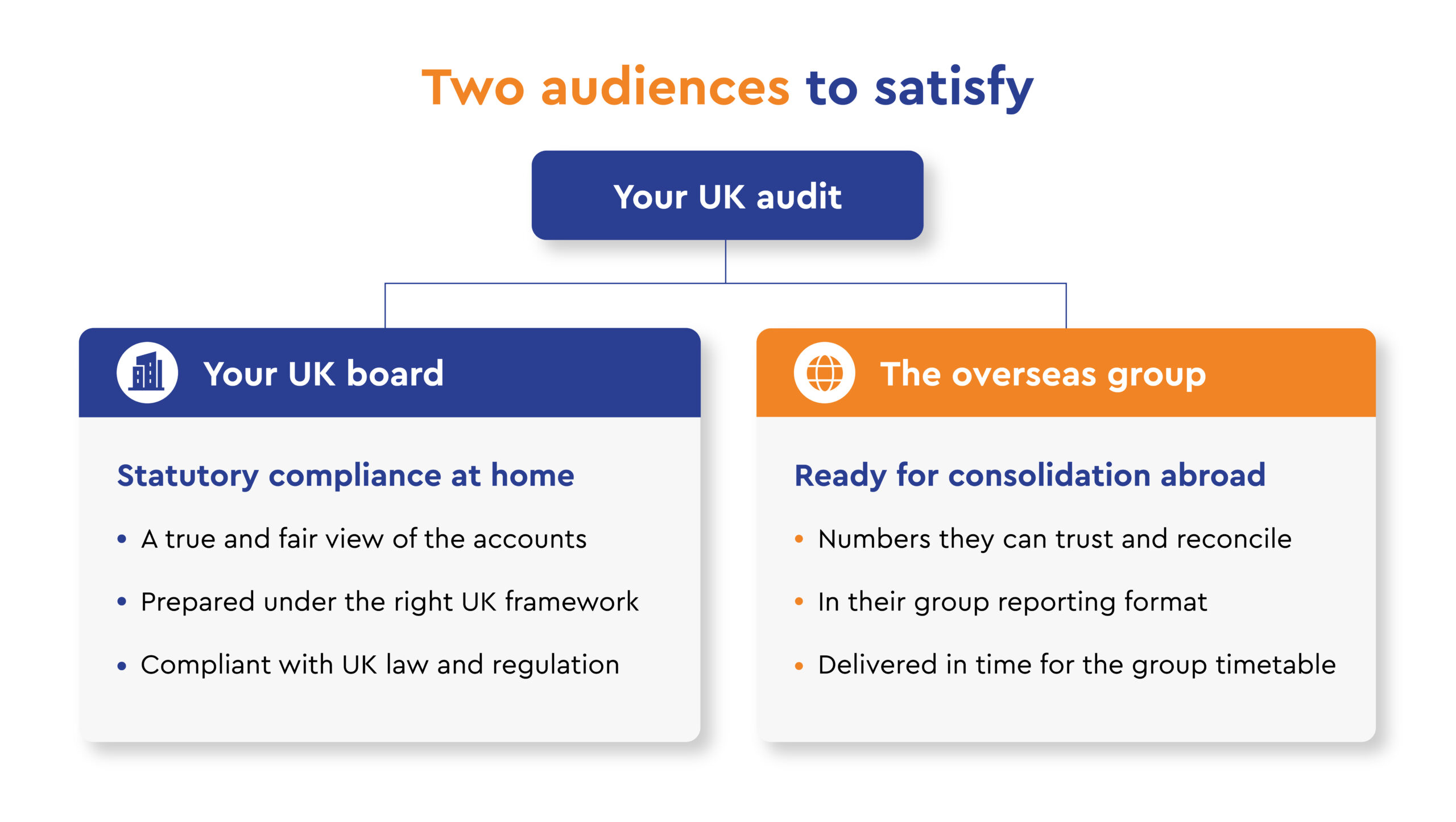
If you’re part of an international group with its HQ in, say, Munich, Mumbai or Melbourne, it’s quite possible that expectations of the audit process are rather different. As a result, you effectively have two audiences to satisfy: your UK board and the finance or audit team of the overseas group.

What does an international group look for in an audit?

Your colleagues in the parent company are probably not seeing the audit as a straightforward compliance exercise. They want your auditor to provide timely and reliable assurance in a format that is going to be compatible with their own consolidated financial statements.

According to the Financial Reporting Council, ISA (UK) 600 stipulates that the group auditor remains responsible for the group audit opinion, but ‘component’ auditors can form part of the group engagement team. The group auditor is expected to direct, supervise and review the work of the component auditors.

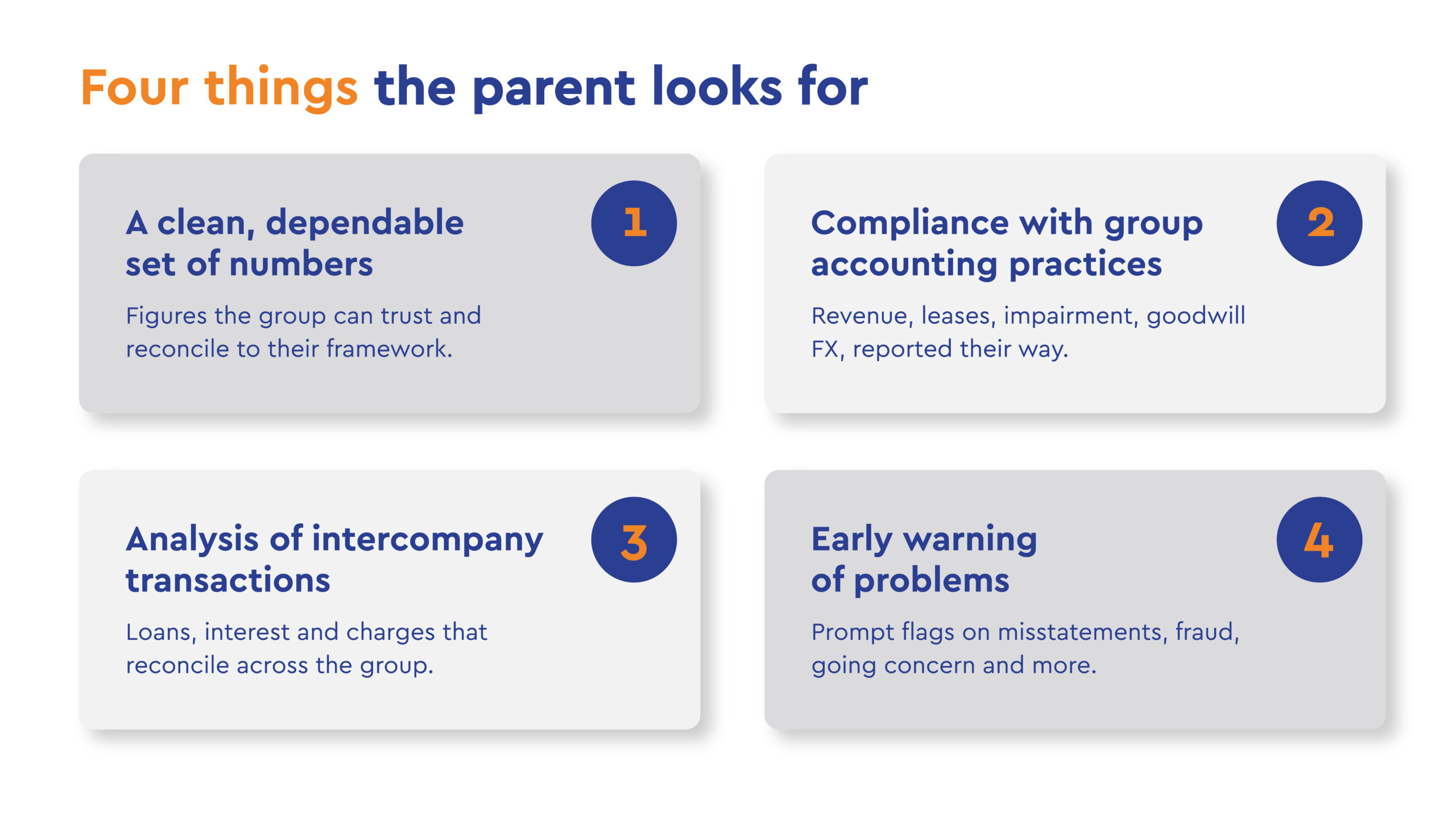
With this in mind, you’ll need to make sure you’re providing:

A clean and dependable set of numbers

This is far-and-away the most obvious point. The group must be able to trust the figures your auditor gives them. Remember, you might be using a framework such as FRS 102, whereas they might report under IFRS, US GAAP or another national framework. It’s not unreasonable to expect your auditor to work with a group reporting package in mind, identify differences and confirm that specified adjustments have been appropriately reflected.

Compliance with group accounting practices

Here, we could be talking about anything from revenue recognition, leases and provisions, through to impairment, goodwill and foreign exchange. It’s really important to understand what the parent company requires and to report exceptions clearly if necessary.

Analysis of intercompany transactions and balances

The parent company needs to be confident that transactions between your UK business and other group companies have been properly recorded and that intercompany receivables, loans, interest, management charges and other transactions reconcile. If there are differences between your ledger and that of an overseas affiliate, it’s going to become a headache at the point of consolidation.

Early warning of problems

When the final audit report arrives, the parent company obviously doesn’t want any unexpected surprises. While hopefully many of the issues listed below won’t be a problem, you should definitely encourage prompt communication from your auditor in relation to any:

  • Material misstatements
  • Control deficiencies
  • Suspected or identified fraud
  • Breaches of law or regulation
  • Management bias
  • Significant provisions or contingent liabilities
  • Litigation
  • Worries over going concern
  • Unusual transactions
What does this mean in terms of expectations of your auditor?

Given the issues described above, it’s important that your auditor is capable of taking the parent’s instructions and translating them into a clear, local audit programme. They must understand what the parent needs and how much evidence is required, as well as what must be reported and when.

On that last point, timing may be almost as important as technical quality.

The parent may have a group timetable that requires your ‘subsidiary’ audit to be completed by a particular point, allowing for consolidation, tax reporting, investor reporting and board approval. A strong UK auditor should be able to work backwards from that timetable, flag issues and produce a concise report or completion memorandum.

This memorandum might cover:

  • Audit opinion
  • Unadjusted differences
  • Key audit findings
  • Controls
  • Tax
  • Related parties
  • Going concern
  • Other matters (litigation, fraud etc)
But don’t forget the statutory requirements in the UK

While it’s important to bear all the above in mind, nothing takes away from the fact that your auditor has clear legal obligations here in the UK. They are not the ‘employee’ of the parent company. The accounts must always give a true and fair view and have been prepared under the appropriate framework, complying with relevant legislation. The reporting instructions from the overseas parent cannot override any of these obligations.

So ultimately, the auditor has to wear two hats. They need to ensure that all the reporting is compliant with UK regulations, while simultaneously accommodating the demands and requests of the group business abroad.

What distinguishes a really good auditor?

Clearly at Page Kirk, we have a vested interest, as we provide audit services ourselves! But whoever you choose to appoint, you need to make sure they tick certain boxes.

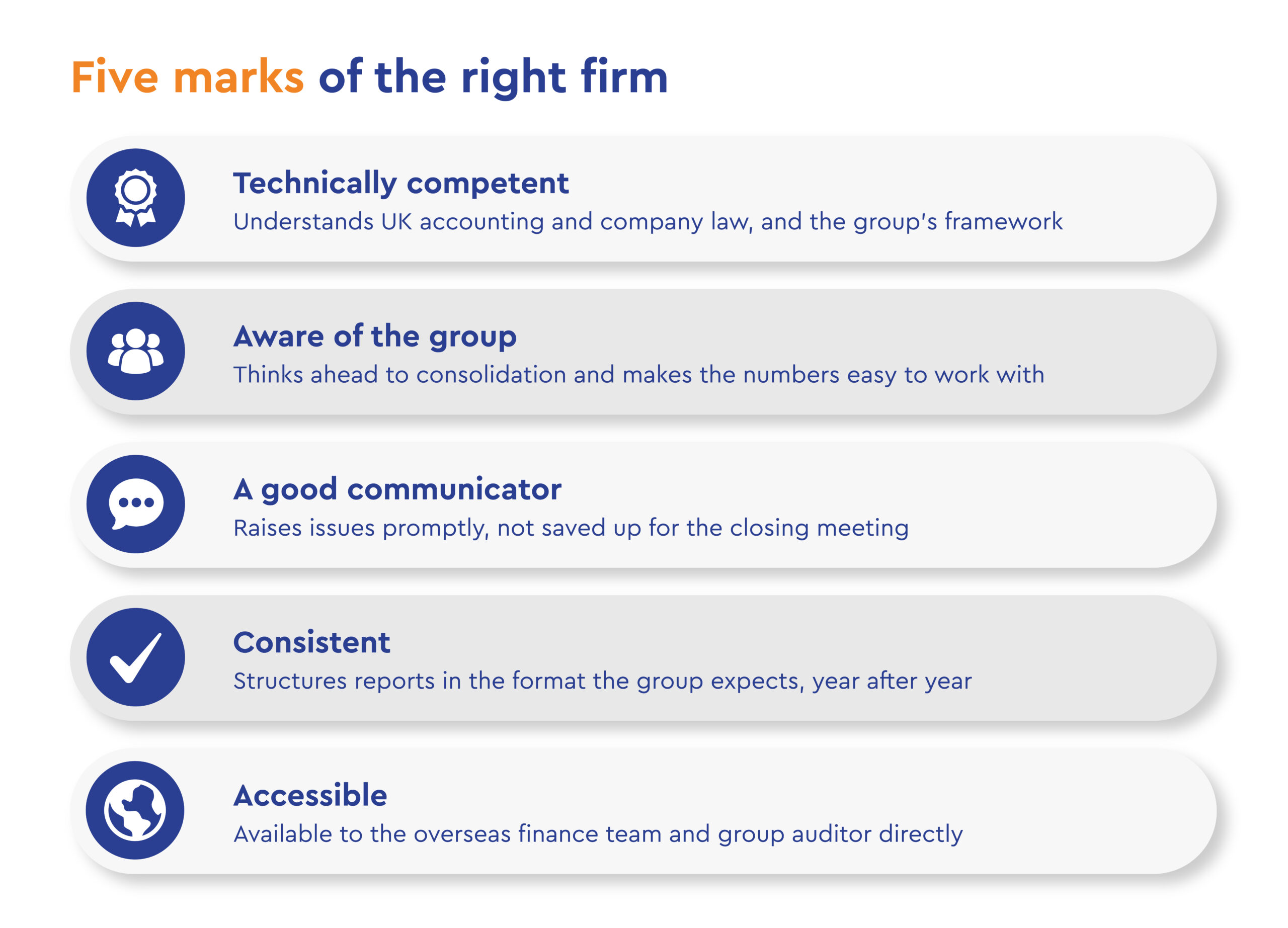
They need to be:

Technically competent – understanding UK accounting and company law, while also engaging with the group’s reporting framework.

Aware of the group and its requirements – thinking about the ultimate consolidation and making it as easy as possible for group auditors to work with their numbers.

Good communicators – raising issues promptly rather than hiding them away for a closing meeting.

Consistent – structuring reports in the format the group expects, year after year.

Accessible – making themselves available to the overseas finance team and group auditor, allowing for direct conversation rather than having every issue filtered through the reporting process.

In summary, for an overseas parent, the best UK audit company won’t simply produce a UK-compliant report. They’ll also make the UK company an easier component of the global audit.

Just before I sign off, it’s worth mentioning an interesting side issue. A UK private company may qualify for the small-company audit exemption, depending on its circumstances. If two of the following apply, then you may fall into this category:

  • The turnover of the business is no more than £15m
  • There are assets of no more than £7.5m
  • There are no more than 50 people employed

The parent group, however, may insist on a more complete audit even if UK regulations would allow for an exemption. Statutory duties and group requirements are not necessarily the same thing.

If you’d like to discuss your own audit issues in more detail or are looking to appoint a new auditor firm to work with you, please don’t hesitate to reach out. You can contact us by phone on 0115 955 5500 or email enquiries@pagekirk.co.uk.

Click here to find out more about our audit and assurance services.

The Page Kirk team ensures all content is accurate, fact-checked, and aligned with current financial standards.

Latest Articles