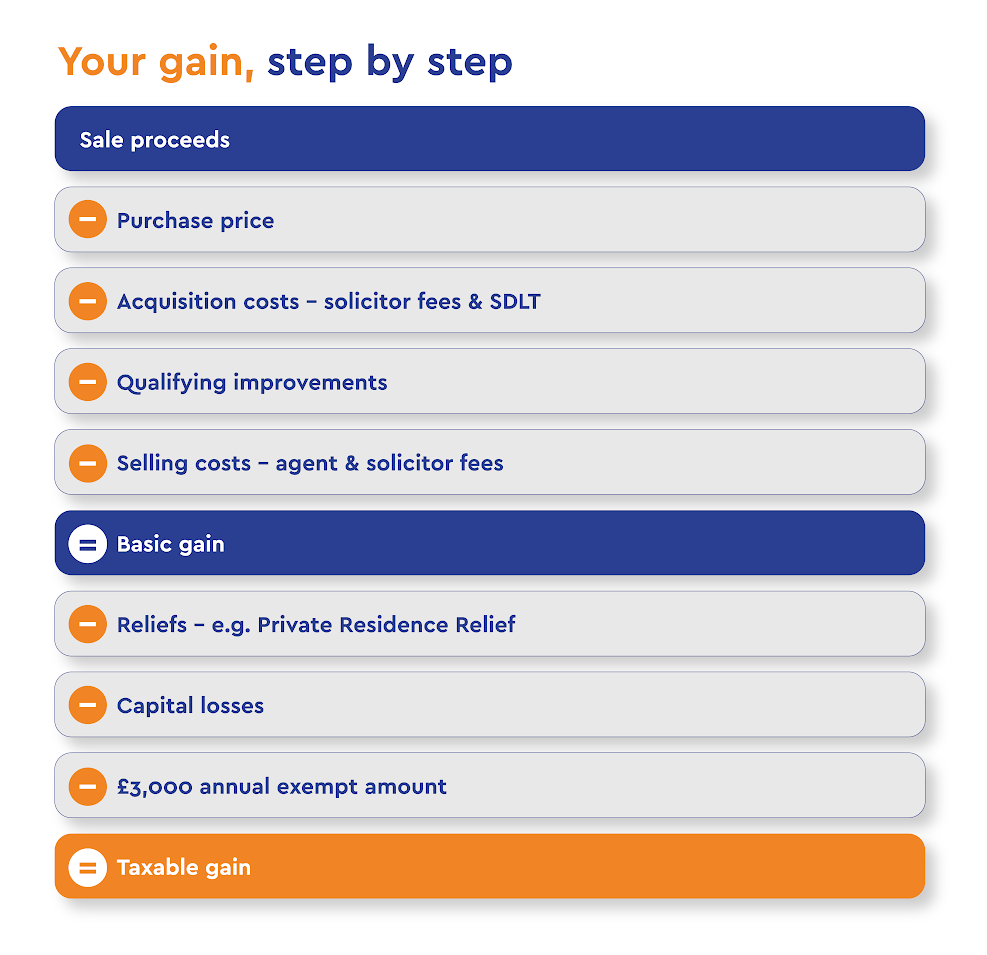
There are then some other things to consider, which is when having an accountant available can often be handy. You need to think about:
- Private residence relief, if applicable (see section immediately below)
- Other applicable reliefs
- Capital losses
- Your £3,000 annual exempt amount (see section further below)
If you’ve ever lived in the property, find the evidence
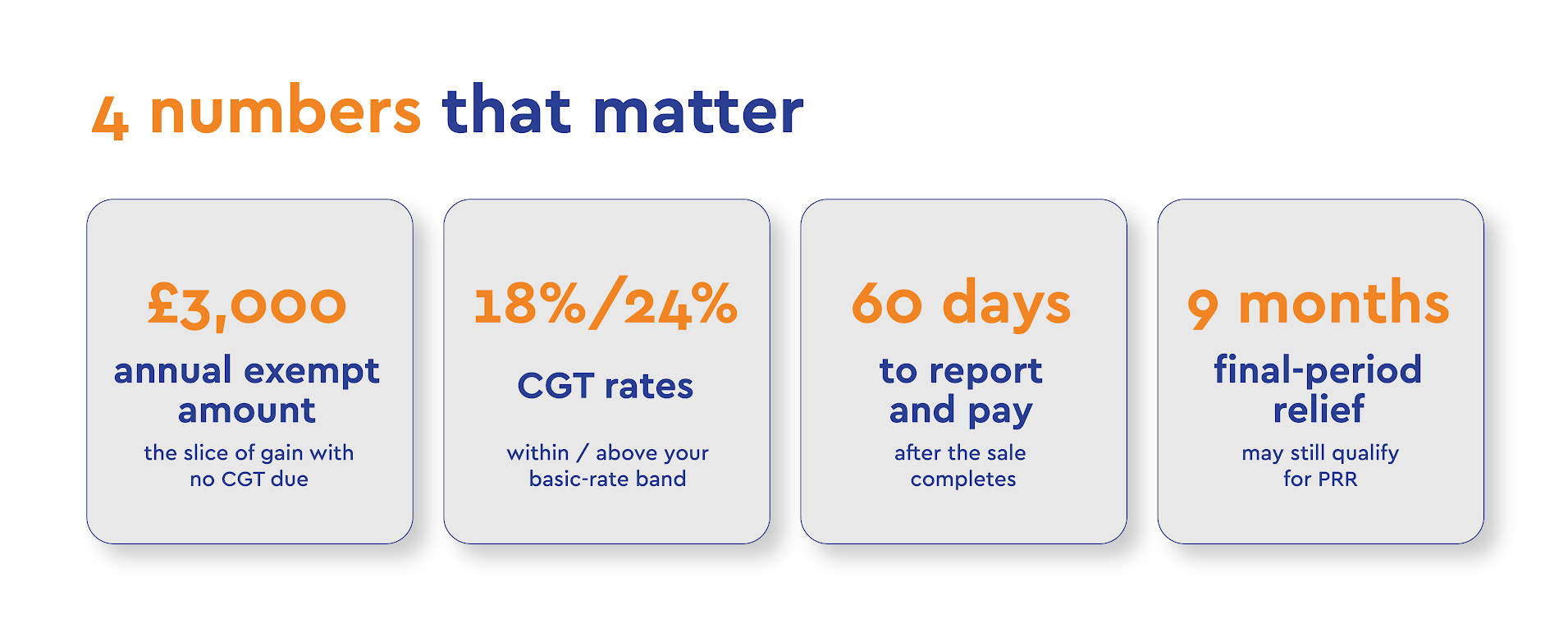
This can make a very significant difference. If the property was once genuinely your only or main residence, you may qualify for Private Residence Relief for the period in question. If you meet certain conditions, the final nine months of your ownership of the property can also qualify.
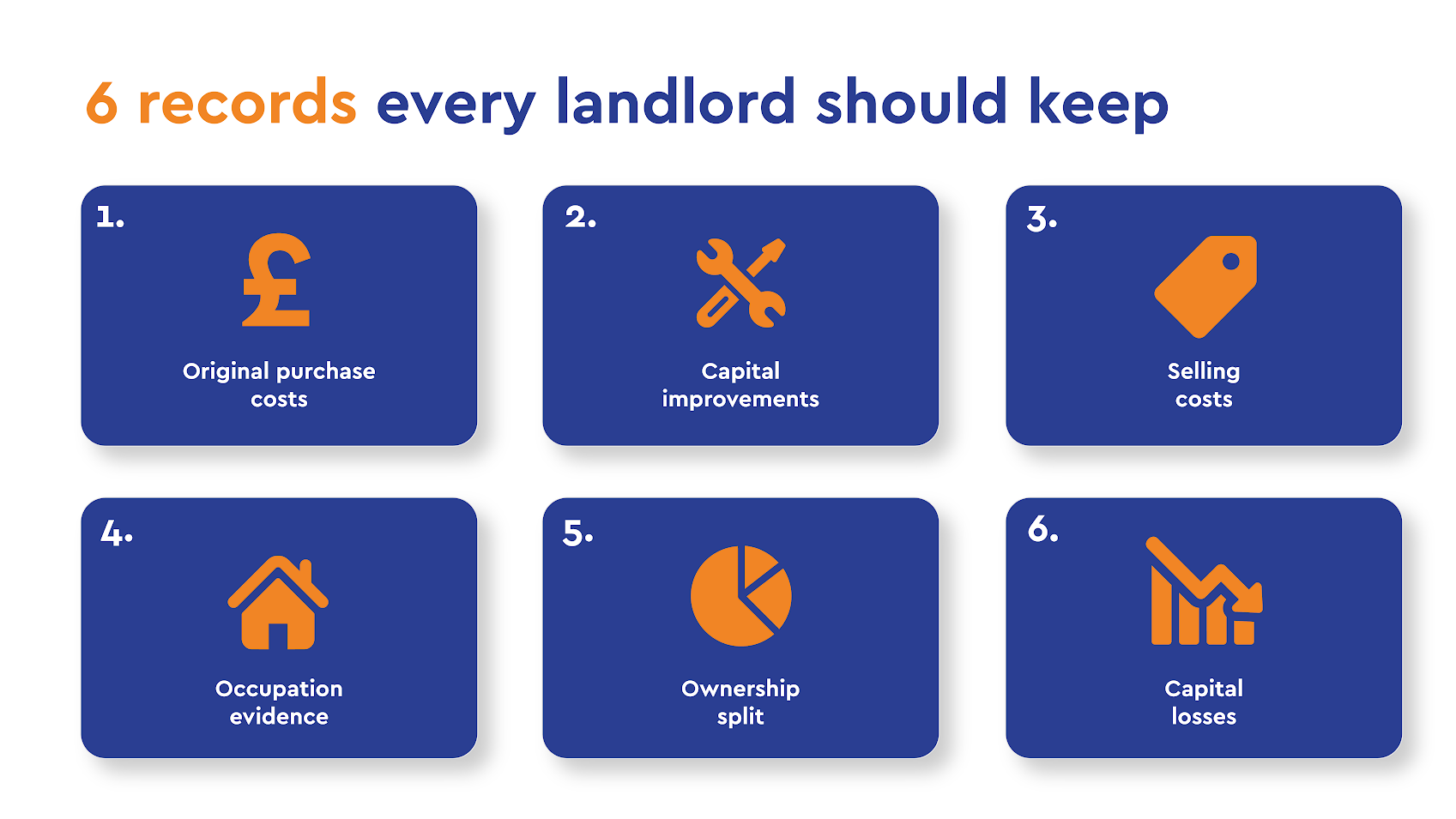
This means you need to have a record of:
- The dates you lived at the address
- The date you moved out
- The date on which it became a rental property
- Evidence of occupation
- Details of any periods the property was empty
Don’t rely on the old £40k Lettings Relief
If you simply bought a property as a buy-to-let and have never actually lived there, Lettings Relief isn’t generally available. Back in 2020, the rules changed, as the previous relief appeared too generous – benefiting people who had long since moved out, but retained their former home as an investment.
Although things are more restricted now, different rules may apply if you were actually living at the property at the same time as a tenant.
Keep track of your ownership percentage
If you own the flat or house jointly, make sure you establish each owner’s legal/beneficial share, keep evidence of the ownership split and calculate each person’s gain separately. As far as HMRC is concerned, jointly owned property is calculated according to the share owned.
Consider your spouse or civil partner
If you’re married or in a civil partnership, don’t overlook the possibility of ownership planning. For CGT purposes, transfers between spouses and civil partners are typically made on a no-gain/no-loss basis. This can potentially allow the use of two people’s CGT allowances and tax bands, when the property is ultimately sold. But this is an area where it’s a really good idea to take some professional advice, as you also need to take into account issues such as income tax, mortgages and beneficial ownership.
Check whether you have capital losses
As you’d expect, allowable capital losses can be offset against gains. Not only that, but unused losses can generally be carried forward. So look to see if you:
- Have made a capital loss on another investment
- Have previously reported a CGT loss
- Have unused losses available
It’s important to note, however, that property rental losses are not the same thing as capital losses!
Don’t forget the £3,000 annual exemption
This is the exemption figure for 2026/7, representing the amount on which no tax is due. So if your net chargeable gain is, say, £50,000 after allowable costs and reliefs, the taxable gain is only £47,000. While this may not make a huge amount of difference to your ultimate bill, you won’t want to look a gift horse in the mouth.
Check your income tax position in the year of sale
Individual CGT rates for 2026/7 are 18% to the extent the gain falls within your basic-rate income tax band, and 24% above that band. Your taxable income for the year will therefore affect the amount you have to pay.
Watch the date of disposal
The timing matters. If you sell, don’t leave the CGT calculation until the normal self-assessment deadline. You actually have to report the disposal and pay the CGT within 60 days.